The cocktail hour is probably the most underrated moment of a wedding. Ninety minutes during which your guests meet, raise their first glass, take in the venue. The music that dresses this moment will not be the most danceable of the day — but it is what decides, in a few minutes, the tone of the entire reception.
The question comes up every time: a DJ, a live musician, or both? Our answer is clear — live music does not replace the DJ, it introduces him. Here is why, and how we score the cocktails of our weddings.
01 · The instant that sets the tone
Why the cocktail deserves live music
The cocktail is the only moment of the wedding when your guests are neither seated nor dancing. They walk, observe, discuss. A recorded playlist will go unnoticed — that is precisely its role: to stay in the background. But the cocktail is not background noise: it is a stage. You, the couple, are being introduced to half of the guests for the first time. The sonic décor deserves to match that staging.
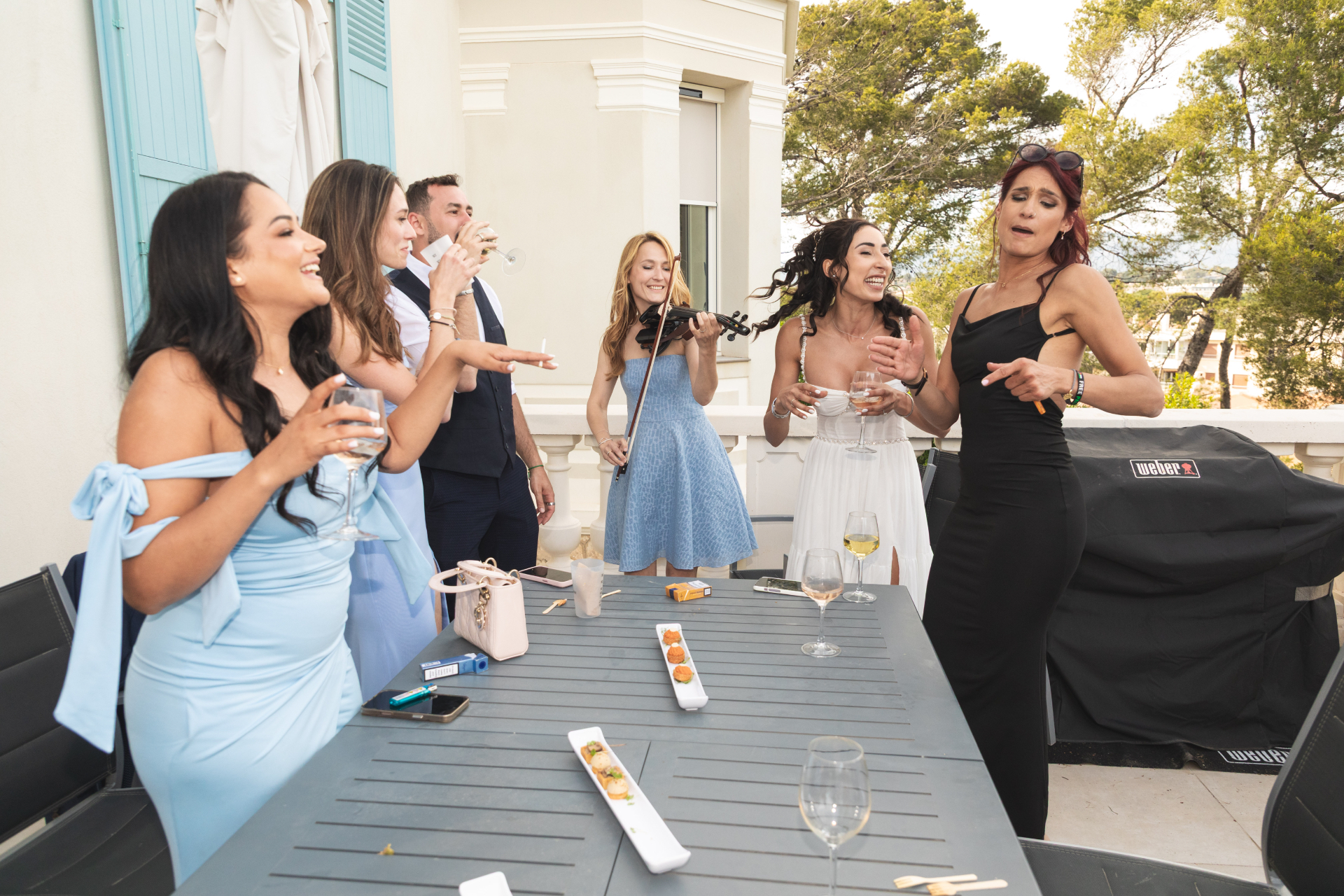
A live musician at the cocktail immediately creates two things no DJ can create at that moment: a reason to stop, and a topic of conversation. Guests walk towards the music, listen for a few minutes, walk back commenting — which is exactly what you want. Music stops being décor and becomes a moment.
02 · A matter of space, not prestige
Solo or string ensemble: which to choose
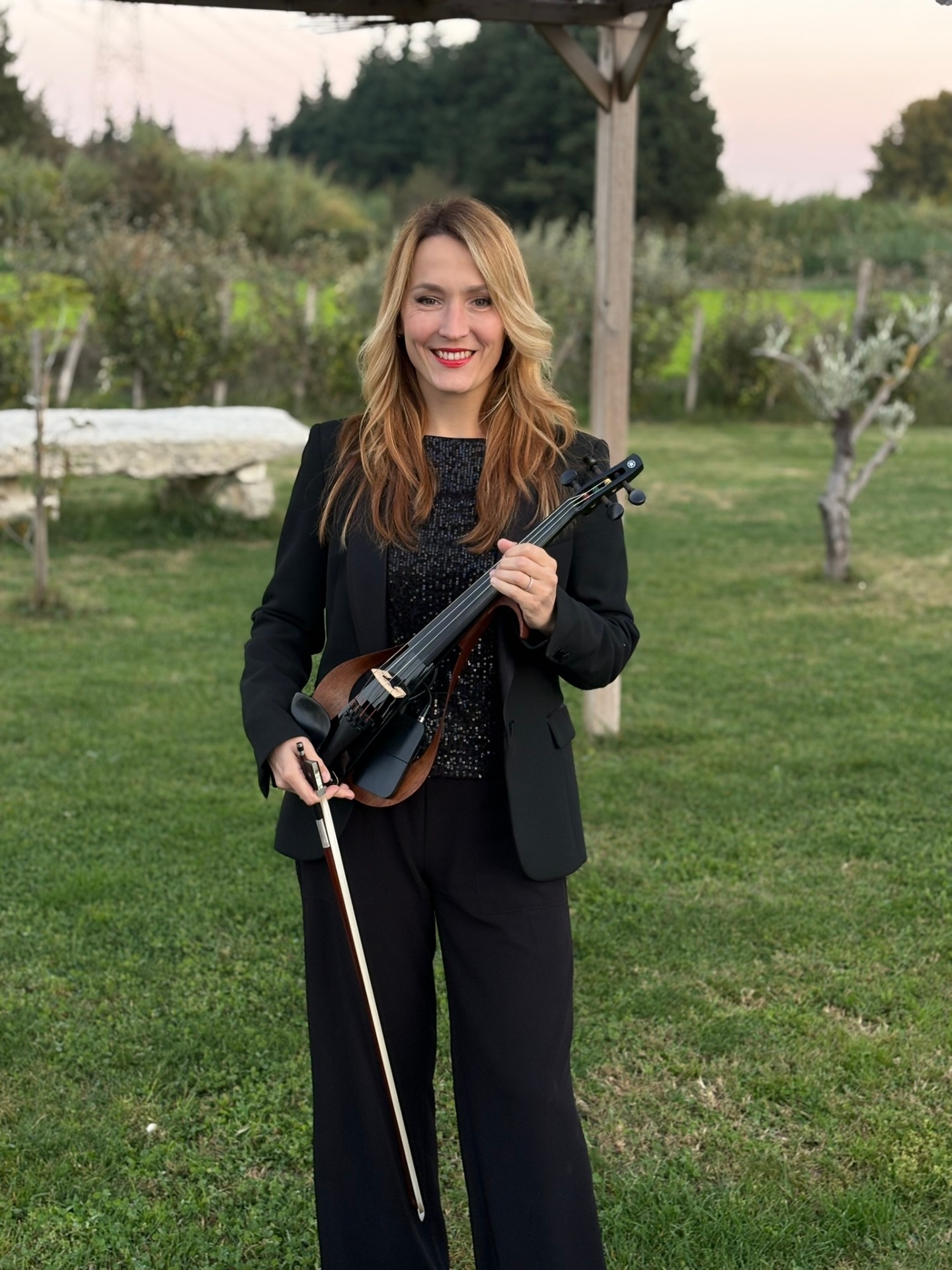
The solo violin is the most mobile, most flexible and warmest format. A violinist who moves between groups, who steps closer to play a few notes for a specific guest, who adapts intensity to the volume of conversations — it is a living, almost choreographed presence. Ideal for cocktails of 40 to 80 guests, in tighter spaces (walled gardens, villa terraces, bastides).
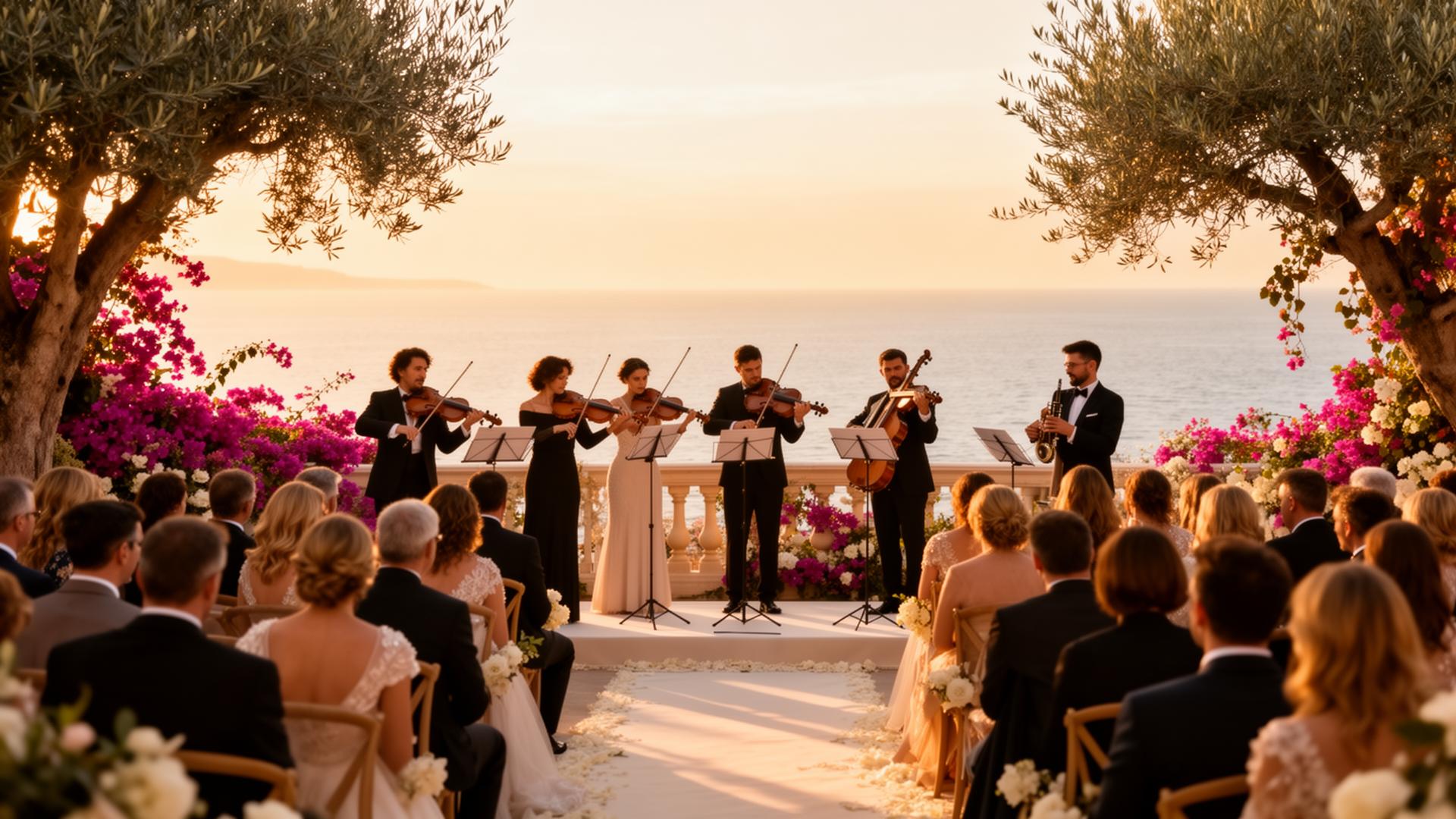
The string ensemble — trio or quartet — sets a more solemn, more orchestral atmosphere. Sonic density carries further, and the visual effect of an ensemble installed on a large terrace or facing the sea is striking. The ideal format for cocktails of more than 100 guests, or for venues with high ambient volume (open outdoor spaces, historic venues with reverberant acoustics).
Solo
Solo violin: intimate cocktails, tighter spaces, chic and relaxed atmosphere, mobile presence among guests.
Trio or quartet
String trio or quartet: large cocktails, open terraces, solemn and orchestral atmosphere, installed and prestigious presence.
03 · Live and DJ are not competitors
The handover to the DJ
It is a persistent misconception: choosing live music at the cocktail does not mean giving up the DJ. It means placing each in their proper role. Live music dresses elegance — ceremony, vin d'honneur, cocktail. The DJ dresses celebration — end of dinner, dance floor, until the end of the night. Two complementary skills, and the most successful weddings are almost always those that combine both.
We regularly work alongside the region's best DJs. The handover is prepared: the DJ usually starts at the couple's entrance to dinner, sometimes for a dinner-ambiance set, sometimes straight to the evening party. The live ensemble can return a second time for a key moment (first dance, musical surprise) before leaving the night to the DJ.
04 · Recognisable but not expected
Our repertoire advice for the cocktail
At the cocktail, the trap is playing the ceremony repertoire — Pachelbel, Ave Maria, etc. Too solemn. The opposite trap is playing obvious pop hits — too expected. Our rule is simple: recognisable but not expected. String arrangements of Coldplay, Adele, Ed Sheeran, but also film themes (Morricone, Williams, Zimmer), arranged jazz standards, revisited French chanson.
The desired effect: a guest who stops, recognises a song he loves, but in a version he has never heard. He smiles, turns to his neighbour. That is the moment your cocktail becomes memorable.
Going further